
Texas Coast Pilot Project: Environmental Forensics to Assess Climate Change Effects on Fecal Contamination Towards Management for Vulnerable Communities
Project Summary
The Texas Coastal Zone is an important ecological and recreational area that faces water quality challenges from pollution, wastewater discharge, and runoff from rapid development. One significant concern is fecal bacteria contamination, which has been well-documented in various locations along the Texas coast. Limited studies highlight the multifaceted nature of this water quality issue, driven by factors such as freshwater discharge to the coast, climate change, and land-use changes resulting from development and population growth. Climate change, in particular, will affect coastal water temperatures, pH composition, organic matter composition (which, in turn, affects bacterial viability), and sea-level changes.
In response to these challenges, the Meadows Center is conducting a pilot project to develop an environmental forensics approach to understand and predict fecal bacterial contamination for coastal management. Our approach involves multivariate analysis of traditional water quality parameters, such as Enterococcus counts, major ions in seawater, and chlorophyll, augmented with two new data types. These new data types are based on recent innovations in measuring bacteria and optical brighteners. New analytical techniques developed by Texas Stream Team now enable community scientists to measure bacteria and other microorganisms using rapid test kits, and optical brighteners are being used as indicators of sanitary wastewater in storm drainage outfalls and receiving waters.
Researchers will employ new techniques performed on a high-throughput basis (both for water-quality analysis and with a pipeline to automated data analysis), which is an important facet for developing logistically feasible tools for coastal management. The resulting data will be analyzed using an environmental forensics approach, including standard multivariate analysis techniques and emerging artificial intelligence techniques.
All data and codes will be published as open-source, making them accessible to the public and providing valuable insights for managing Texas' coastal environments. The Texas coast is an ideal location for this pilot project, as it remains relatively understudied in terms of the indicators used, the approaches employed, and the needs and benefits of the local community. The study will focus on Texas bays and estuaries with historically high levels of bacteria, such as recreational beaches in Harris, Matagorda, and Nueces counties.
Project Resources
- Texas Beach Watch Program Water Quality Data Summary Report – Meadows Center, 2021
- How dirty are Texas beaches? Researchers are using AI to better track bacteria levels – KUT News, July 1, 2024
Project Leads
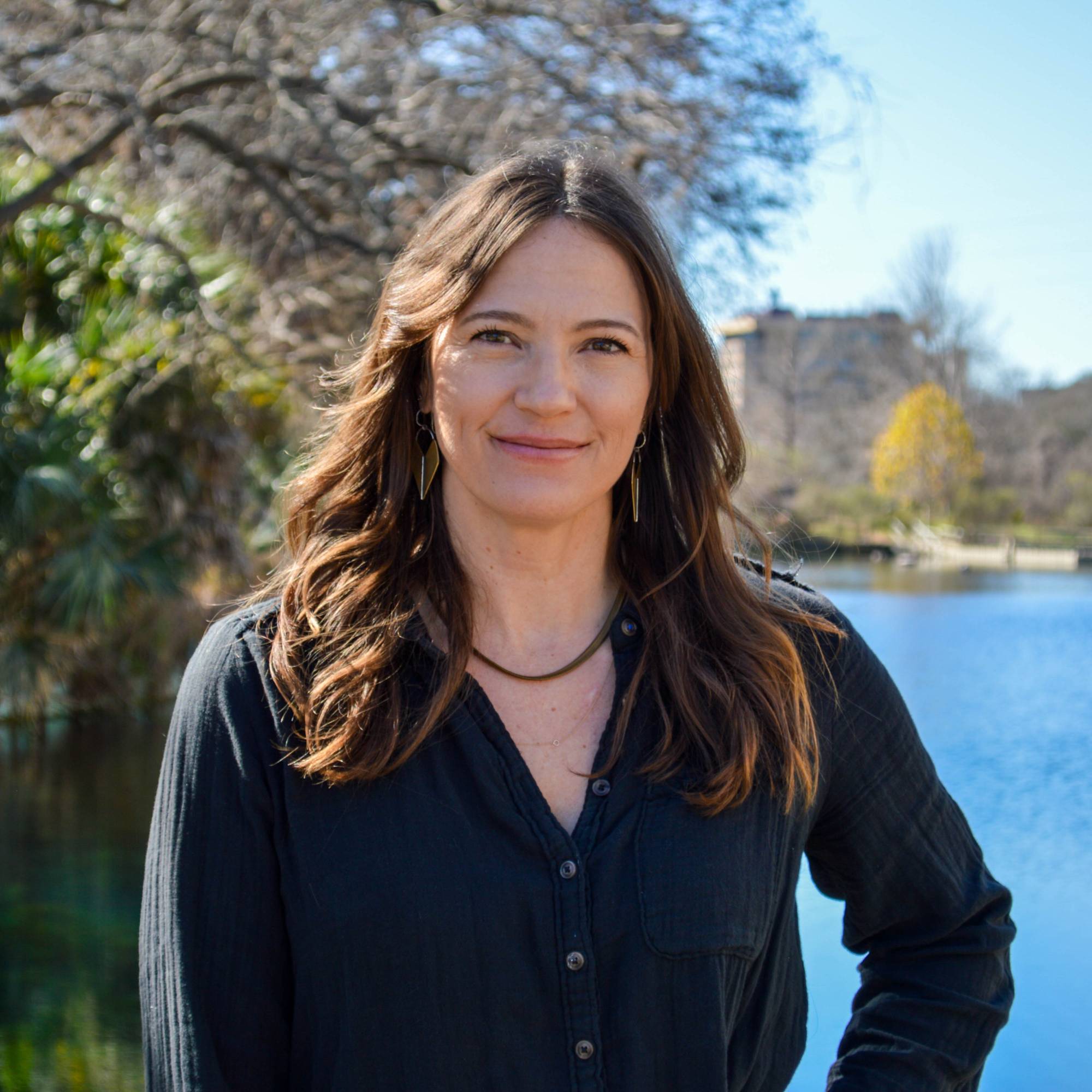
Jenna Walker, M.A.Geo
Director of Watershed Studies
(512) 245-9148
jj1433@txstate.edu
Funder
This project is funded by National Oceanic and Atmospheric Administration.